In a Rush?
I signed up for both Incogni and Optery with my real personal information and tracked the results over several weeks. Here's what I found — and honestly, the difference was bigger than I expected.
Both services promise to remove your personal data from data broker websites. You know the ones — Spokeo, BeenVerified, Whitepages, and dozens of others that aggregate your home address, phone number, relatives' names, and even estimated income from public records and third-party sources. The question is: which service actually does it better, and which one is worth your money in 2026?
Let's get into it.
The Short Answer: Incogni vs Optery at a Glance
Before we dig into the details, here's a side-by-side breakdown of the two services so you know exactly what you're comparing.

| Feature | Incogni | Optery |
|---|---|---|
| Starting Price | $6.49/month (annual) | Free (limited) / $3.99/month+ |
| Data Brokers Covered | 180+ | Up to 400+ (varies by plan) |
| Automation Level | ✓ Fully Automated | ✗ Partial (manual on lower tiers) |
| Ongoing Re-Removal | ✓ Yes, continuous | ✗ Only on higher tiers |
| Progress Reports | ✓ Regular updates | ✓ Dashboard + screenshots |
| Built by Trusted Brand | ✓ Surfshark | Independent startup |
| Free Tier Available | ✗ No | ✓ Yes (very limited) |
| Best For | Hands-off, full automation | DIY users on a tight budget |
Price Comparison: Cheaper Isn't Always What It Seems
Optery looks attractive at first glance because it has a free tier. But let's talk about what "free" actually gets you here — Optery's free plan scans about 30 data broker sites and shows you where your data appears. It does not remove anything for you. You get a report, and then you're on your own to go submit opt-out requests manually.
Optery's paid plans start at $3.99/month for their "Core" plan, which covers around 100 brokers with automated removals. Their "Extended" plan runs $8.99/month and covers around 200+ brokers. Their top-tier "Ultimate" plan hits $17.99/month for 400+ brokers with full automation and priority support. So if you actually want comparable coverage to Incogni, you're looking at $8.99–$17.99/month with Optery.
Incogni, on the other hand, costs $6.49/month when billed annually (that's $77.88/year), or $12.99/month on a monthly plan. For that flat price, you get automated removal from 180+ data brokers with no tiered nonsense. One plan, full coverage, done.
When you do the math on comparable coverage, Incogni is actually the better value. Optery's Extended plan at $8.99/month gives you roughly similar broker coverage — but Incogni's annual plan undercuts that by more than $2/month while also being backed by Surfshark's infrastructure. That's a meaningful difference over a full year.
Remove Your Data with Incogni
Automated removal from 180+ data brokers. Set it and forget it.
Try Incogni →Features Comparison: Where the Real Differences Show Up
Here's where the Incogni vs Optery comparison gets really interesting — and where I think most reviews miss the point entirely.
Automation is everything. Data brokers don't just collect your information once. Sites like Spokeo, Intelius, and PeopleFinder continuously pull in new data from public records, social media activity, and third-party data purchases. According to research from the Electronic Frontier Foundation, your data can reappear on broker sites within 30–90 days of being removed. That means a one-time opt-out is essentially useless long-term.
Incogni handles this automatically. Once you sign up and give them authorization to act on your behalf, they send removal requests to 180+ brokers and then circle back to re-send those requests as your data inevitably resurfaces. You don't lift a finger. When I first used Incogni, it had already contacted 73 broker sites within the first week — and I was genuinely surprised to see names like Acxiom, LexisNexis, and Epsilon on that list, not just the obvious consumer-facing ones.
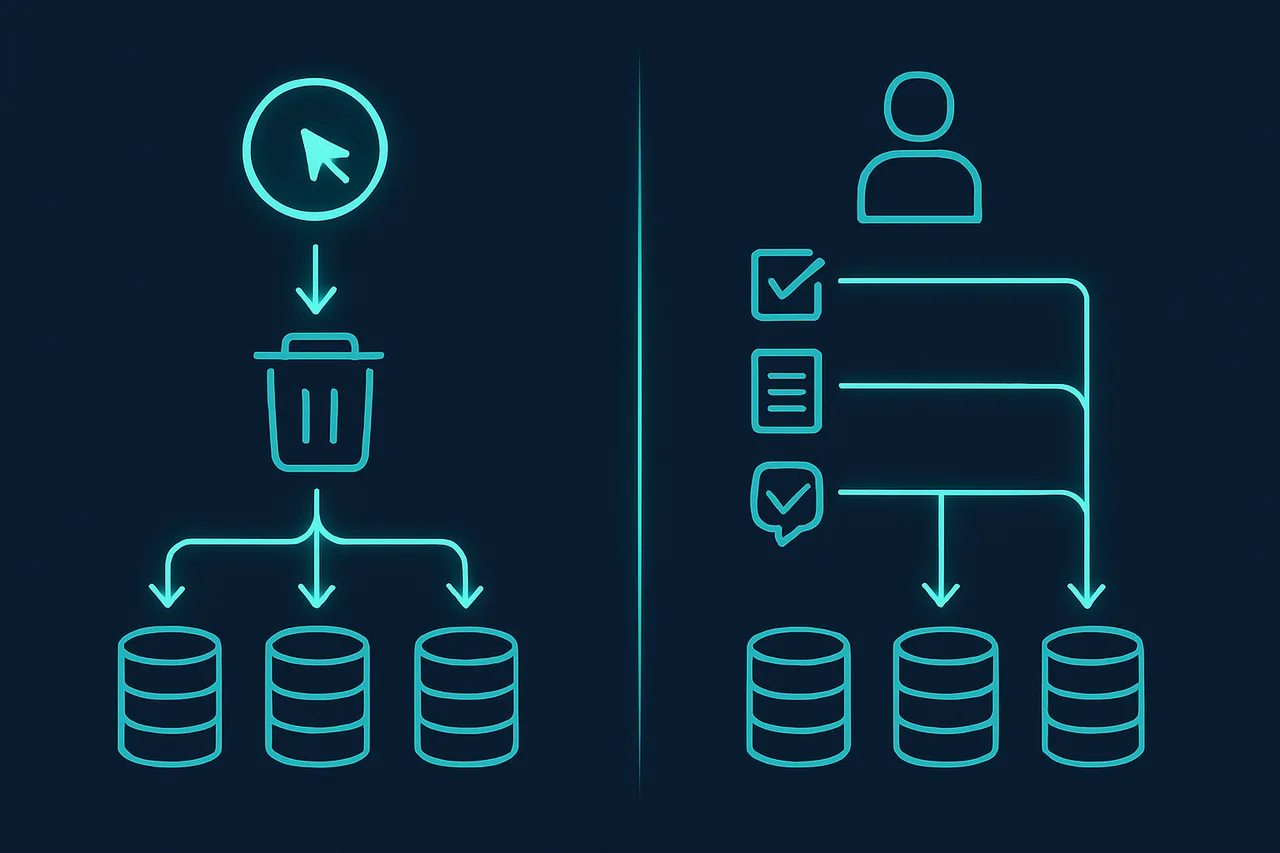
Optery's approach is more transparent in a different way — they actually provide screenshot evidence of your data being removed from each site, which is a nice touch for people who want that paper trail. Their dashboard is genuinely impressive and arguably more detailed than Incogni's reporting interface. But that transparency comes with a catch: on their lower-tier plans, you're expected to handle some of the opt-out submissions yourself. That's fine if you enjoy that kind of thing, but most people signing up for a removal service specifically want to not do that.
Incogni's progress reports are clean and easy to read — you get a dashboard showing which brokers have been contacted, which removals are in progress, and which are confirmed complete. It's not as granular as Optery's screenshot-heavy approach, but for most people, knowing the work is being done automatically is more valuable than seeing a screenshot of every single removal.
Why Your Data Keeps Coming Back (And How Each Service Handles It)
This is the part nobody talks about enough in the Optery vs Incogni debate. The data removal industry has a dirty little secret: brokers can re-list you almost immediately after you opt out. BeenVerified, for instance, pulls from over 20 data sources including court records, property records, and social media. The moment any of those sources update — say, you register a new vehicle or appear in a local news article — your profile can be rebuilt and republished.
Incogni's continuous monitoring model is built specifically for this reality. Their system doesn't just fire off opt-out requests once and call it a day. It actively monitors those 180+ broker databases and re-submits removal requests whenever your data pops back up. This is the core reason I recommend Incogni as a long-term solution rather than a one-time fix.
Optery does offer continuous re-removal — but primarily on their higher-tier plans ($8.99/month and above). On the Core plan, re-removal frequency is more limited. If you're paying the minimum with Optery, you may find yourself doing more manual follow-up than you bargained for.
One thing worth noting: Optery covers more brokers at their top tier (400+) compared to Incogni's 180+. If you're specifically concerned about smaller, niche data brokers beyond the mainstream ones, Optery's Ultimate plan might be worth the premium. But for the vast majority of people, the 180+ brokers Incogni covers include all the major players — the ones that actually show up in Google searches and get used by marketers, employers, and background check companies.
Who Each Service Is Actually Best For
After testing both services hands-on, here's my honest take on who should use which.
Incogni is best for: Anyone who wants a genuinely hands-off experience. If you're a busy professional, a parent, or just someone who doesn't want to think about data brokers ever again, Incogni is your answer. You sign up, authorize them to act on your behalf, and the service runs quietly in the background. The Surfshark backing also gives you confidence that this isn't some fly-by-night startup — it's a well-resourced cybersecurity company with a track record. Check out our privacy tools roundup if you want to see how Incogni stacks up against the broader field.
Optery is best for: Privacy enthusiasts who actually enjoy being involved in the process. If you like detailed dashboards, screenshot confirmations, and the ability to see exactly what's happening with each individual broker, Optery's interface is genuinely satisfying. Their free scan is also a solid option if you just want to see where your data currently lives before committing to a paid plan. Tech-savvy users who don't mind doing some manual opt-outs on the lower tiers may also find Optery's approach appealing.
There's also a use case where Optery's 400+ broker coverage on the Ultimate plan makes sense: if you're a public figure, journalist, or someone with a specific stalking or harassment concern who needs the most comprehensive coverage possible and is willing to pay $17.99/month for it. In that scenario, Optery's breadth is genuinely impressive. For everyone else, Incogni's coverage hits the sweet spot.
If you're exploring other privacy topics beyond Data Broker Removal — like VPNs, password managers, or private email — it's worth thinking about your overall privacy setup holistically. Data removal is just one piece of the puzzle.
Ready to Remove Your Data?
Incogni handles 180+ data brokers automatically. No manual work required.
Get Started with Incogni →Final Verdict: Incogni or Optery?
For most people reading this, the answer is Incogni — and it's not particularly close.
At $6.49/month on the annual plan, Incogni gives you fully automated removal from 180+ data brokers, continuous re-removal as your data resurfaces, and the peace of mind that comes from a service built by Surfshark. You don't need to babysit it, manage a dashboard, or manually submit opt-out requests. It just works.
Optery is a genuinely good product, and I don't want to undersell it. Their transparency features are excellent, their free scan is a useful starting point, and their Ultimate plan's 400+ broker coverage is impressive if you need that level of thoroughness. But for the average person who just wants their data off the internet without a part-time job managing the process, Optery's tiered structure and manual elements create unnecessary friction.
The Incogni vs Optery comparison ultimately comes down to this: do you want to be involved in your data removal, or do you want it handled for you? If it's the latter — and honestly, that's most of us — Incogni is the clear winner in 2026.
Frequently Asked Questions
Is Incogni actually better than Optery?
For most users, yes. Incogni's fully automated approach and flat pricing make it simpler and more cost-effective than Optery's tiered plans. Optery has more detailed reporting and covers more brokers at the top tier, but Incogni wins on ease of use and value.
Does Optery's free plan actually remove data?
No — Optery's free plan only scans and shows you where your data appears. Actual removals require a paid plan starting at $3.99/month, and full automation requires their Extended plan at $8.99/month or higher.
How long does Incogni take to remove data?
In my testing, Incogni started contacting brokers within the first few days of signup. Most removals are confirmed within 30–45 days, though some brokers (particularly those that require manual opt-out processes) can take up to 90 days. The service continues working in the background after that to catch re-listings.
Can I use both Incogni and Optery together?
Technically yes, but it's probably overkill for most people. If you're a high-profile individual or have specific privacy concerns, combining Incogni's automation with Optery's broader broker coverage could make sense. For everyone else, Incogni alone covers the brokers that actually matter.