Is TorGuard VPN in Maintenance Mode
Something is going on with TorGuard VPN, and nobody at the company seems interested in talking about it. Over the past two years, a pattern has emerged that is hard to explain as anything other than a service winding down. No app updates since February 2024 — nearly two years now. An official Twitter account quietly handed off to someone who does not work there. Affiliates reporting months of unpaid commissions. And through all of it, near total silence from TorGuard leadership.
I have been reviewing VPNs for years. I have watched services rise and fall. And what I am seeing with TorGuard right now has all the hallmarks of a company that has stopped investing in its product but has not told anyone yet. That is not a formal accusation. It is an observation based on publicly available evidence that anyone can verify.
Let me walk you through what is actually happening.
⭐ S-Tier VPN: NordVPN
S-Tier rated. 6,400+ servers, fastest verified speeds, RAM-only servers. Independently audited no-logs policy. NordLynx protocol for maximum performance.
Get NordVPN →No App Updates in Nearly Two Years
The last time TorGuard updated its desktop VPN application was February 26, 2024 — version 4.8.29 for Windows, Linux, and macOS. That is nearly two years without a single update. The Android app is even worse. Its last update was April 2023 — approaching three years ago. You can verify this yourself on the TorGuard downloads page.
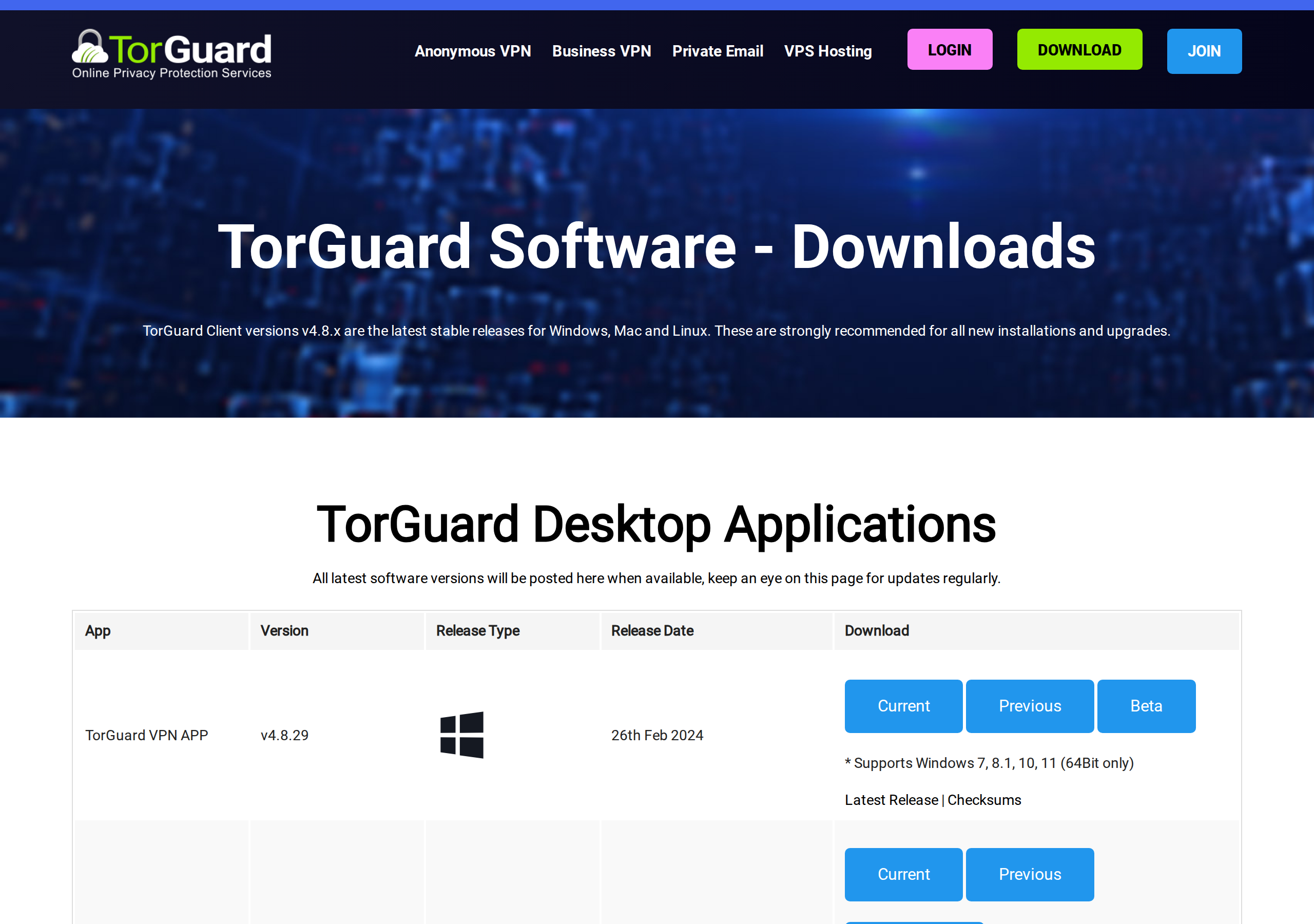
For a VPN service, this is not a minor detail. VPN apps need regular updates for security patches, protocol improvements, and compatibility with operating system changes. The VPN industry moves fast. WireGuard implementations are constantly improving. OpenVPN gets patched. Operating systems change their networking stacks. A VPN app that has not been updated in nearly two years is not just stale — it is a potential security liability.
Independent reviewers have noticed the same thing. CyberInsider's 2026 review found that TorGuard's WireGuard implementation was "inoperable, constantly returning connection errors." Speeds that used to reach 200 Mbps had dropped to between 9 and 50 Mbps on US servers. You do not get performance degradation like that when a team is actively maintaining the infrastructure.
TorGuard's own forum users have been raising the alarm. A thread titled "No New Updates?" from November 2025 pointed out that this is "the longest period of time without an update to the VPN service." Another thread, more bluntly titled "Product appears to be defunct," noted that "the product seems minimally supported and entirely un-updated." The user expressed "a lack of confidence in the company's viability."
These are not angry Reddit trolls. These are paying customers on TorGuard's own forum asking why the product they are paying for has stopped being developed.
The Twitter Account Situation
This one is genuinely bizarre. TorGuard handed control of its official Twitter/X account to vx-underground, a well-known infosec personality who runs one of the largest malware research archives on the internet. vx-underground is a respected figure in cybersecurity circles, but they are not a TorGuard employee. They are not part of TorGuard's marketing team. They run a malware sample collection.
The only reason anyone knows about this is because the Twitter account itself announced it. TorGuard as a company did not put out a blog post. No internal memo to users. No Reddit post. No email to subscribers. Nothing on their official blog or any other communication channel. The community found out through the Twitter account — the one that was no longer being run by TorGuard. People were understandably confused.
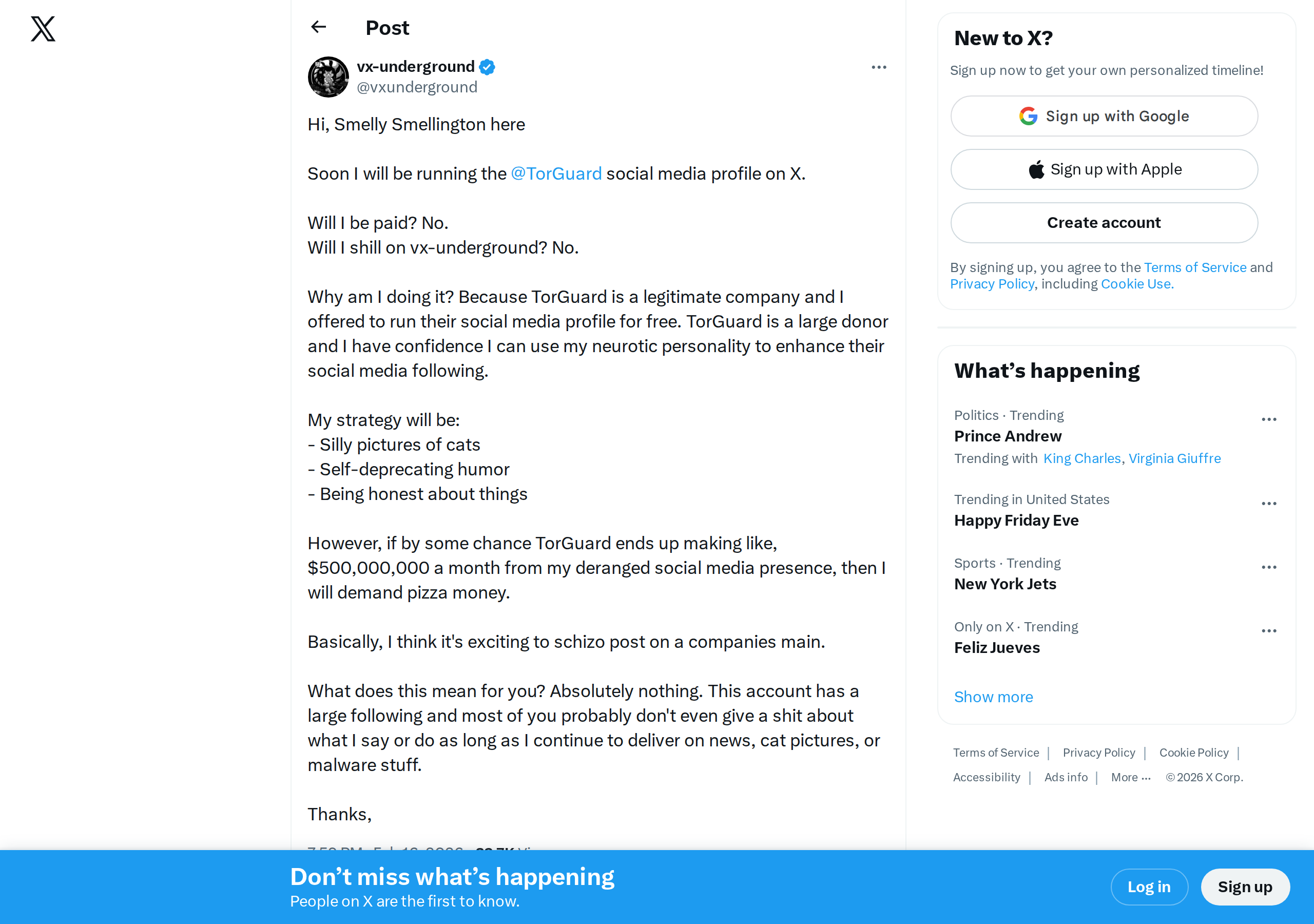
This is not how healthy companies manage their social media presence. A VPN company's official social account is a customer-facing channel. It is where users go for updates, support issues, and product announcements. Handing that to someone who has no connection to the company — no matter how well-respected they are in their own field — and then not even bothering to tell your community through any official channel sends a very specific signal. It says either nobody at TorGuard cares enough to manage their own communications, or there is nobody left to do it.
It is worth noting that TorGuard has a history of social media issues. In 2023, their official Telegram channel was compromised through an insider at Telegram and handed to a known fraudster who used it to scam Iranian users. That incident showed a company struggling to maintain control of its own communication channels. The Twitter handoff feels like another chapter of the same pattern.
The Layoff Joke That Was Not a Joke
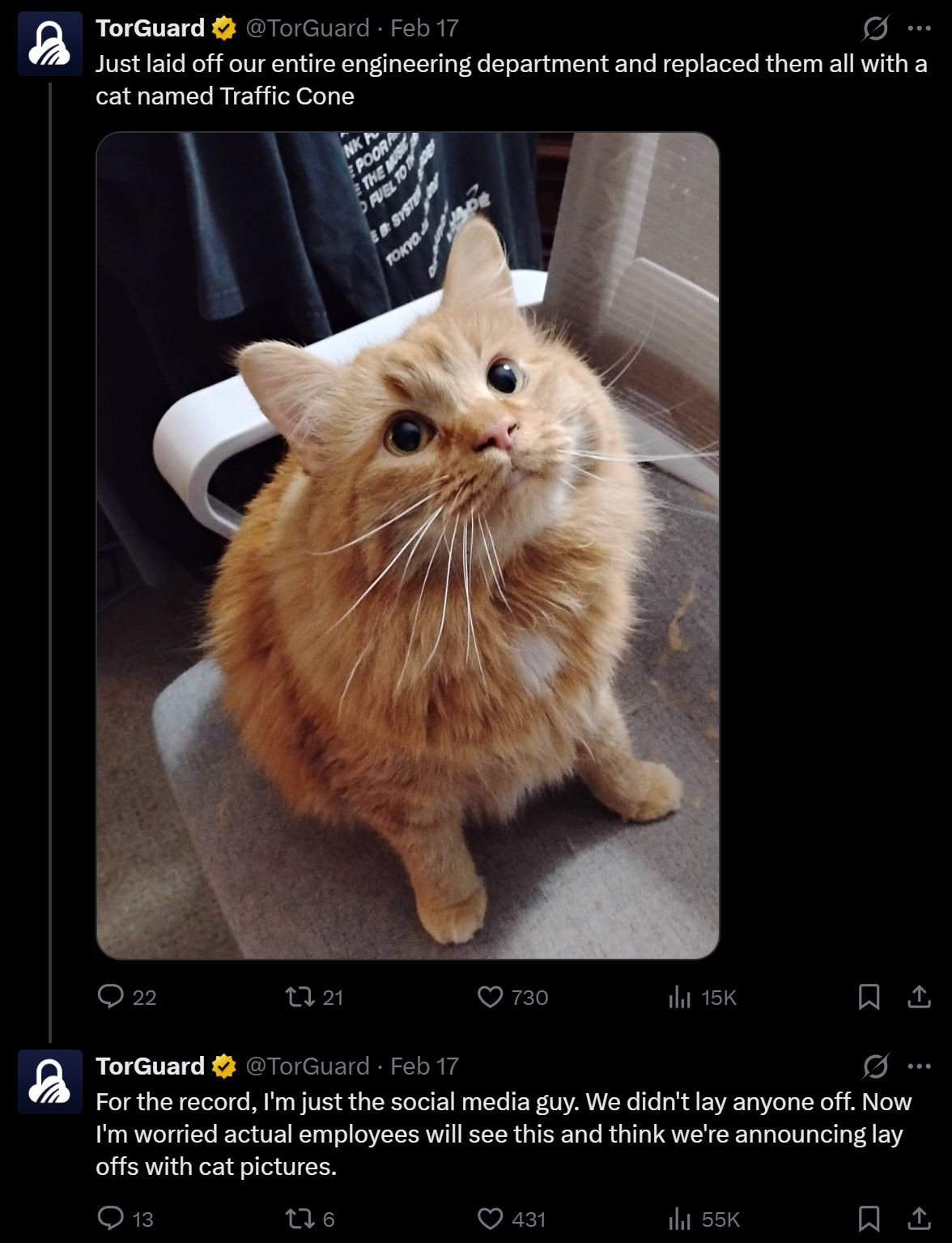
Within days of taking over TorGuard's official Twitter, the account posted: "Just laid off our entire engineering department and replaced them all with a cat named Traffic Cone." A follow-up tweet clarified it was a joke — "For the record, I'm just the social media guy. We didn't lay anyone off."
Except TorGuard did lay off their developer. FixedBit (Jason), who worked on TorGuard's apps, posted in May 2024 that he no longer works for TorGuard. Subsequent posts revealed he had to sell his house shortly after, describing the experience of "packing and moving out of a house you only lived in for a few months" and warning others to "listen to those red flags when you see them in business, because the person you trusted may just go crazy and turn on you."
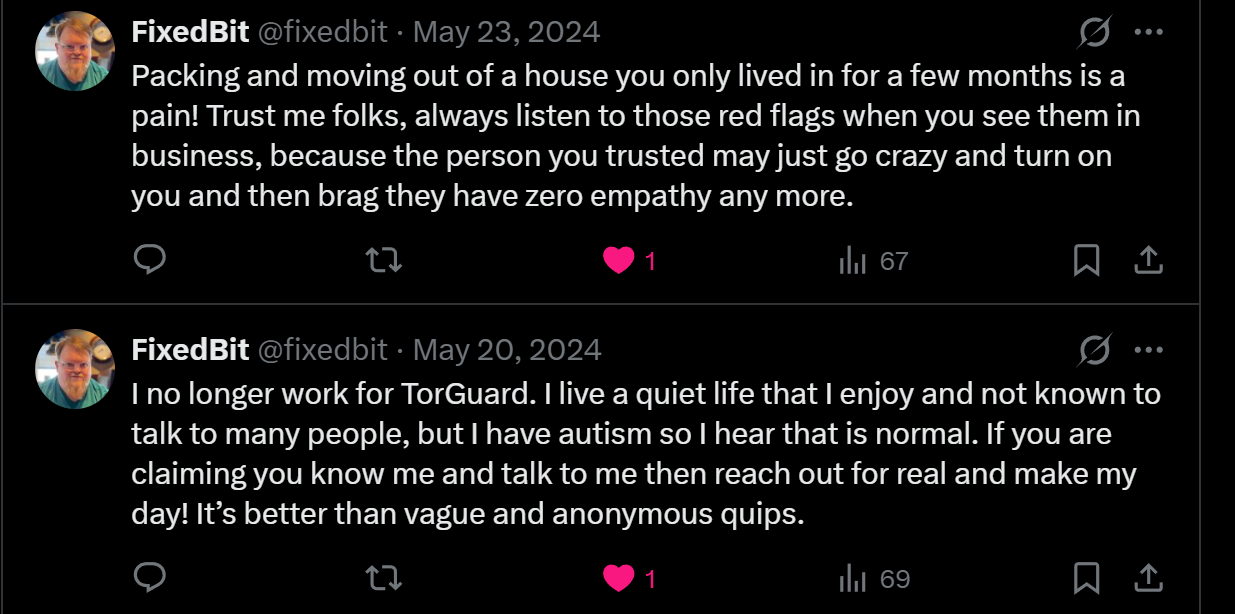
So the person now running TorGuard's official social media is joking about laying off engineers — while the company's actual developer was laid off, lost his home, and described the experience as a betrayal. Whether vx-underground knew about Jason's situation or not, the optics are terrible. This is the kind of thing that happens when you hand your brand to someone who has no context about the company's actual history or the people affected by it.
Affiliates Not Getting Paid
The affiliate payment issue might be the most telling sign of all. VPN companies depend heavily on affiliate marketing — bloggers, review sites, and YouTube creators who promote their service in exchange for a commission on referred sales. When a VPN company stops paying its affiliates, that is usually one of the first visible signs of financial trouble.
Reports on the TorGuard forums show affiliates who have been waiting months for payments without any response from support. One affiliate reported waiting since March 2024 without receiving commissions owed. Support tickets either go unanswered or get merged into other tickets and forgotten.
Here is where things get interesting. When vx-underground announced they would be running TorGuard's Twitter, their post explicitly stated that "TorGuard is a large donor" to vx-underground. So TorGuard apparently has the budget to be a "large donor" to an infosec personality's project — but cannot manage to pay the affiliates who are actually driving sales for their business? That is a remarkable set of financial priorities for a company that some are already questioning the viability of. Donors get public goodwill. Affiliates just get silence.
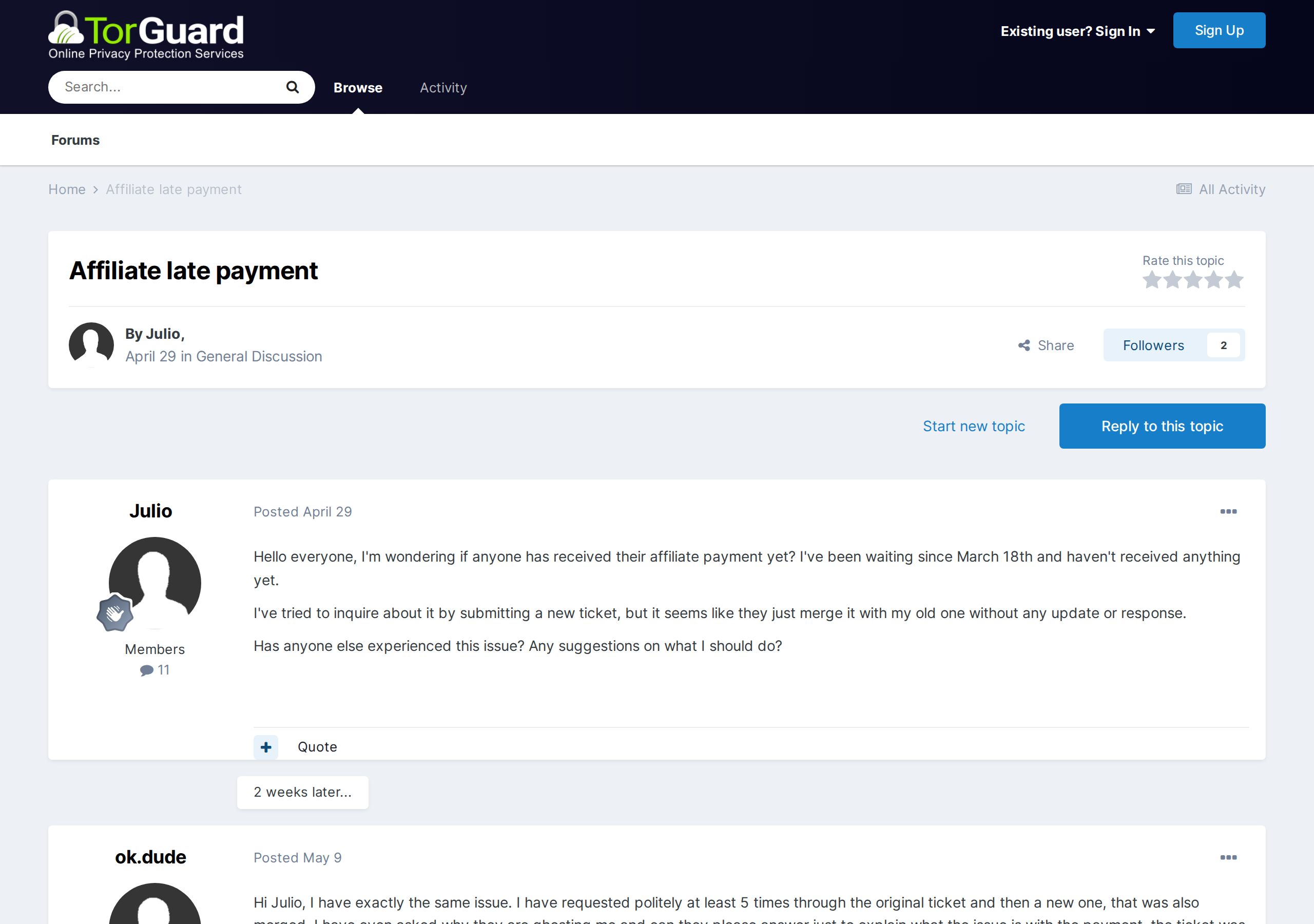
What makes this worse is that many of these affiliates were promised payouts in perpetuity. These were not short-term promotional deals. These were long-term partners who built their businesses around promoting TorGuard based on a commitment of ongoing commissions. TorGuard effectively fired their loyal affiliate base — people who had spent years driving sales for the company — by simply going silent and stopping payments. No formal announcement. No explanation. Just silence.
The irony is hard to miss. The person now running TorGuard's Twitter is joking about laying off the engineering department. But TorGuard actually did lay people off — their developer Jason had to sell his house, and their affiliates who were promised lifetime payouts got ghosted. The joke writes itself, except it is not funny to the people who depended on TorGuard keeping its word.
From what I can tell, this was not a case of a few isolated payment delays. Every affiliate I have spoken to was either canceled outright or simply stopped receiving payments with no explanation. Nobody I have talked to reports being paid. That is not a hiccup in accounting. That is a company walking away from its financial commitments to the people who helped build its customer base.
The Bigger Picture
None of these issues exist in isolation. Put them together and a clear picture emerges.
No app development for nearly two years. A broken WireGuard implementation that nobody is fixing. Speed degradation across servers. An official Twitter account silently handed to someone outside the company with no announcement through any official channel. Affiliates reporting months of unpaid commissions. Forum posts from paying customers asking if the product is dead. Customer support that is, by multiple accounts, unresponsive.
Add to this TorGuard's existing baggage. In 2022, they were sued for copyright violations committed by users on their network and forced to block torrenting on all US servers as part of a settlement. Their CEO faced fraud charges in Greece in 2022 — he was acquitted in 2023, but the case did reputational damage.
And TorGuard is a US-based company operating out of Orlando, Florida. That means they are subject to US government data requests, including the kind of administrative subpoenas that the EFF has been warning about. For a privacy-focused VPN, US jurisdiction is already a disadvantage. For a US-based VPN that appears to have stopped active development, the combination is concerning.
Reddit discussions from 2025 include threads with titles like "TorGuard is Dying" citing financial difficulties, dead forums, lack of updates, and what users describe as toxic community management. Reports of users being banned from the website for disagreeing with management do not help the narrative.
What This Looks Like From the Outside
In the VPN industry, there is a well-known pattern for how services wind down. They stop developing new features. Updates slow and then stop entirely. Customer support response times stretch from hours to days to never. Affiliate payments get delayed. Social media activity dries up or gets outsourced. The servers keep running because there are still paying subscribers, but nobody is investing in the product anymore.
That is what "maintenance mode" means in practice. The lights are still on, but nobody is building anything. The service technically works — sometimes — but it is coasting on whatever was built years ago. New subscribers are still paying, but they are paying for a product that is no longer being improved or, in some cases, properly maintained.
I am not saying TorGuard is about to shut down tomorrow. The servers are still running. You can still sign up and connect. But the evidence strongly suggests that active development has stopped, the team has either shrunk or shifted priorities, and the product is in a holding pattern.
If you are currently paying for TorGuard, you deserve to know that. And if you are considering signing up, you should know what you are signing up for.
⭐ S-Tier VPN: NordVPN
S-Tier rated. 6,400+ servers, fastest verified speeds, RAM-only servers. Independently audited no-logs policy. NordLynx protocol for maximum performance.
Get NordVPN →What TorGuard Could Do to Prove This Wrong
I would genuinely like to be wrong about this. TorGuard has been around for over a decade. They built a legitimate service that a lot of people relied on. If they are not winding down, there are simple things they could do to demonstrate that.
Release an app update. Fix the broken WireGuard implementation. Post a roadmap. Pay their affiliates. Write a blog post addressing the community's concerns. Take back control of their own Twitter account and use it to communicate with customers. Any one of these would signal that someone is still at the wheel.
Until they do, the evidence speaks for itself.
Bottom Line
TorGuard VPN shows multiple signs of being in maintenance mode. No app updates in nearly two years. Broken protocol implementations. An official social media account silently handed to an outsider with no formal announcement to the community. Unpaid affiliate commissions. Unresponsive support. Community members openly questioning whether the product is defunct.
If you are a current TorGuard subscriber, now might be a good time to evaluate alternatives. The VPN market has strong options that are actively developed, regularly audited, and transparent about their operations. ProtonVPN is our top recommendation — Swiss-based, open-source, independently audited, and consistently updated. You can see how all VPNs rank on our transparent 93.5-point scoring system.
I will update this article if TorGuard provides a public response or demonstrates renewed development activity. Until then, what you see is what you get.
Sources: TorGuard Downloads Page, TorGuard Forums - No New Updates, TorGuard Forums - Product Appears Defunct, TorGuard Forums - Affiliate Late Payment, CyberInsider TorGuard Review 2026, Cloudwards TorGuard Review, vx-underground on X, TorGuard Blog - Telegram Channel Compromise.