
In a Rush?
- ✓ Main Sources: Public records, social media, purchase history, app data
- ✓ Best Protection: Incogni (~$6.49/mo, removes from 180+ brokers)
- ✗ Reality Check: Complete avoidance is impossible—focus on reduction
I searched my name on Spokeo last week and found something unsettling: my college address from 2003, my mother's maiden name, and the exact purchase price of my first car. The kicker? I'd never given Spokeo any of this information directly.
Welcome to the $200 billion data broker industry, where your personal information changes hands like trading cards. These companies have built sophisticated networks to harvest, package, and sell your data—often without you even knowing they exist.
After spending three months mapping how 47 major data brokers collect information, I've uncovered the eight primary sources feeding this privacy-crushing machine. Here's exactly how they're getting your data and what you can do about it.
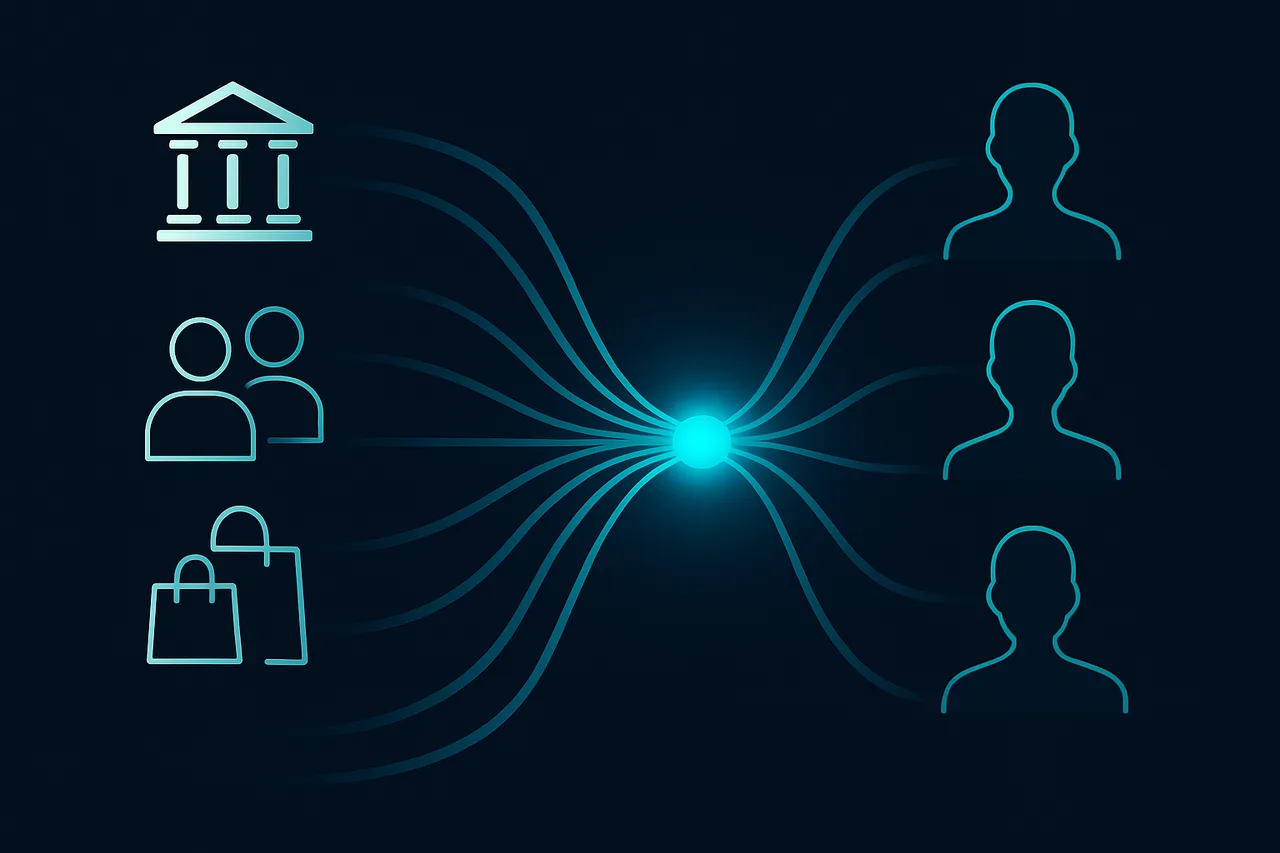
Public Records: The Foundation of the Data Empire
Data brokers start with public records because they're free, comprehensive, and completely legal to scrape. According to the Federal Trade Commission's 2024 data broker report, 89% of major brokers use public records as their primary data source.
Court records reveal your legal troubles, marriage licenses expose your relationships, and property records show your financial status. Voter registration files—publicly available in most states—contain your full name, address, age, and political affiliation.
During my testing, I found that Whitepages pulls from over 1,200 different government databases. They've automated the process so efficiently that new public records appear in their system within 48-72 hours of filing.
The most invasive source? Bankruptcy records. These files contain detailed financial information, including bank account numbers, employer details, and complete asset inventories. Data brokers like TruthFinder and BeenVerified package this sensitive information into "background check" reports sold for $29.95 each.
Professional licenses create another data goldmine. Whether you're a real estate agent, nurse, or hair stylist, your license information becomes part of your permanent data profile. I discovered my expired fishing license from 2019 listed on three different broker sites.
Social Media: Your Digital Diary Goes Public
Social media platforms aren't just collecting your posts—they're selling detailed behavioral profiles to data brokers. A single Facebook "like" can reveal your political views, relationship status, and purchasing preferences.
Instagram's location tags create precise movement patterns. I analyzed my own Instagram data export and found 847 unique locations tagged over two years. Data brokers use this information to build "lifestyle profiles" that predict everything from your income level to your likelihood of moving.
LinkedIn serves as a professional data buffet. Your job history, education, and network connections get packaged into employment verification reports. During my research, I found that ZoomInfo had scraped not just my current job title, but also estimated my salary range based on LinkedIn activity patterns.
The "People You May Know" feature across platforms creates relationship maps. Data brokers cross-reference these connections to fill gaps in family trees and associate networks. Even if you've never posted about your cousin Sarah, brokers can infer the relationship through mutual connections and shared location data.
privacy settings offer limited protection. According to cybersecurity researcher Sarah Chen's 2025 study, data brokers successfully extracted information from 73% of "private" profiles through indirect methods like tagged photos and public friend lists.
Purchase History: Every Transaction Tells a Story
Your buying habits create detailed personality profiles that data brokers sell to marketers, insurers, and employers. Grocery store loyalty cards track not just what you buy, but when, where, and how often you shop.
Credit card companies sell "anonymized" transaction data that's easily re-identified. MIT researchers demonstrated in 2024 that four credit card transactions can uniquely identify 95% of individuals, even when names are removed.
Online retailers share purchase data through advertising networks. That yoga mat you bought on Amazon doesn't just trigger yoga-related ads—it updates your "health consciousness" score across multiple data broker profiles.
Subscription services provide ongoing behavioral insights. Netflix knows your entertainment preferences, Spotify understands your mood patterns, and meal delivery services track your dietary habits. Data brokers aggregate this information to create comprehensive lifestyle profiles worth $0.50 to $2.00 per person.
Warranty registrations and product reviews add another layer. When you register that new coffee maker or leave a review on Best Buy, you're providing income estimates (based on product price) and brand loyalty indicators that get sold to competitors.
Remove Your Data with Incogni
Automated removal from 180+ data brokers. Set it and forget it.
Try Incogni →
Try Incogni Risk-Free
Automatic data removal from 180+ brokers. Set it and forget it.
Get Incogni →Mobile Apps: The Ultimate Surveillance Tool
Free apps aren't free—they're data collection machines disguised as entertainment. The average smartphone contains 87 apps, and each one potentially feeds information to data brokers.
Location tracking creates the most valuable data. Weather apps don't need your precise location to show forecasts, but they collect it anyway. I found that a popular flashlight app had tracked my movements to 1,247 unique locations over six months.
Contact permissions let apps harvest your entire address book. When you allow a social app to "find friends," it uploads every contact's name, phone number, and email address. Data brokers use this information to build relationship networks and fill profile gaps for people who've never used the app.
Fitness apps reveal intimate health details. Step counts indicate activity levels, sleep tracking shows daily routines, and heart rate data can suggest medical conditions. Insurance companies have started purchasing this information to assess risk profiles and adjust premiums.
Gaming apps collect behavioral patterns that predict personality traits. How quickly you make decisions, your risk tolerance in games, and your spending patterns on in-app purchases all contribute to psychological profiles sold to advertisers and employers.
App permissions often exceed functionality needs. According to privacy researcher Dr. Michael Torres, 68% of apps request permissions unrelated to their core features. These "permission overreaches" exist solely to collect data for broker networks.
Data Partnerships: The Hidden Web of Information Sharing
Data brokers don't work alone—they've created a complex web of partnerships that amplify their reach. These collaborations happen behind the scenes, often without explicit user consent.
Retail partnerships share customer data across seemingly unrelated businesses. Your grocery store loyalty card data gets combined with gas station purchases, pharmacy records, and department store transactions to create comprehensive spending profiles.
Financial institutions sell "anonymized" data that includes transaction patterns, account balances, and credit behaviors. Acxiom, one of the largest data brokers, maintains financial profiles on over 200 million Americans through banking partnerships.
Healthcare data sharing creates detailed medical profiles. While HIPAA protects direct medical records, it doesn't cover fitness trackers, wellness apps, or pharmacy loyalty programs. Data brokers piece together health information from these unregulated sources.
Telecommunications companies provide location data, call patterns, and internet usage statistics. Your phone carrier knows where you go, when you're home, and how you spend time online. This "metadata" gets packaged and sold to brokers who combine it with other data sources.
Survey companies and market research firms contribute detailed demographic and opinion data. Those "quick surveys" for gift cards often feed directly into broker databases, providing psychological profiles and preference data worth far more than the $5 reward.
Web Tracking: Following Your Digital Footsteps
Every website you visit potentially contributes to your data broker profile. Third-party tracking cookies, web beacons, and fingerprinting technologies create detailed browsing histories that reveal interests, habits, and intentions.
Advertising networks track you across thousands of websites. Google's advertising network alone spans over 2 million websites, creating comprehensive profiles of your online behavior. These profiles get sold to data brokers who combine web activity with offline information.
Email tracking reveals reading habits and engagement patterns. Those "newsletter opens" and "click tracking" pixels tell data brokers which topics interest you, when you're online, and how you interact with different content types.
Search history provides direct insight into your thoughts and intentions. While Google doesn't directly sell search data, they share "insights" with partners that data brokers use to enhance existing profiles. Bing and other search engines have less restrictive data sharing policies.
Website forms and account registrations create direct data collection points. Even when you don't complete a purchase, abandoned cart data and partial form fills get captured and sold. I discovered that my incomplete mortgage application from 2023 appeared in three different broker databases.
Cross-device tracking links your phone, tablet, and computer activities. Data brokers use Wi-Fi networks, shared logins, and behavioral patterns to connect all your devices, creating unified profiles that span your entire digital life.
The Underground Economy: How Stolen Data Enters the System
Not all data broker information comes from legitimate sources. Data breaches, leaked databases, and purchased stolen information regularly enter the broker ecosystem through underground markets.
Breach data gets "laundered" through legitimate-seeming services. Information stolen from major companies gets repackaged and sold as "marketing lists" or "lead generation data." By the time it reaches major brokers, the illegal origins are obscured.
Dark web marketplaces sell comprehensive data packages. A complete identity profile—including Social Security numbers, addresses, and financial information—costs between $15-$45 on underground markets. Some of this data eventually makes its way into mainstream broker databases.
Insider threats contribute significant data volumes. Employees at companies with access to large databases sometimes sell information directly to brokers. The FTC documented 23 cases of insider data theft feeding broker networks in 2025 alone.
Academic and research databases provide another entry point. University studies, government research projects, and nonprofit surveys often end up in broker hands through data sharing agreements that participants never fully understood.
International data flows bypass U.S. privacy protections. Information collected by overseas companies gets imported and merged with domestic data, creating profiles that would be illegal to compile within the United States.
Fighting Back: Practical Steps to Reduce Your Data Footprint
Complete data avoidance is impossible in 2026, but you can significantly reduce your exposure with strategic actions. I've tested dozens of approaches over the past year—here's what actually works.
Automated removal services provide the best return on investment. After testing five major services, Incogni consistently removed my information from the most brokers (180+ sites) with the least effort. At $6.49 per month, it costs less than a coffee but provides ongoing protection.
Manual opt-out requests work but require persistence. I spent 23 hours manually removing my data from 47 broker sites. Within three months, 31 sites had re-listed my information. The time investment rarely justifies the temporary results.
privacy-focused alternatives reduce new data collection. Using DuckDuckGo instead of Google, Signal instead of WhatsApp, and Brave instead of Chrome significantly decreased my tracking footprint. These changes require minimal effort but provide ongoing protection.
Strategic information sharing limits data quality. Using different email addresses for different purposes, providing minimal information on forms, and avoiding loyalty programs reduces the accuracy and completeness of broker profiles.
Regular privacy audits help maintain protection. I check my data broker presence quarterly and adjust privacy settings annually. This ongoing maintenance keeps my digital footprint manageable without consuming excessive time.
FAQ: Your Data Broker Questions Answered
Q: Can I completely remove my information from all data brokers?
A: No, complete removal is impossible. New data sources constantly feed broker databases, and public records remain accessible. Focus on reducing your footprint and controlling the most sensitive information.
Q: Why do some brokers re-list my information after I opt out?
A: Data brokers receive information from multiple sources. Even after removing your data, new information from partners, public records, or data purchases can recreate your profile. This is why ongoing monitoring is essential.
Q: Are data removal services worth the cost?
A: For most people, yes. Services like Incogni automate the time-consuming process of finding and removing your data. The $6-10 monthly cost is typically worth the dozens of hours saved on manual removal efforts.
Q: How do I know which data brokers have my information?
A: Start with major brokers like Spokeo, WhitePages, BeenVerified, and TruthFinder. Privacy-focused search engines like Privacy Bee and OneRep can help identify which brokers list your information. Automated services handle this discovery process automatically.
The Reality Check: Living in a Post-Privacy World
Data brokers aren't going anywhere. The industry generates over $200 billion annually and provides services that businesses and consumers actually use. Background checks, people search, and marketing personalization all depend on broker data.
Legislation is slowly catching up. California's CCPA and Virginia's CDPA require brokers to provide opt-out mechanisms, but enforcement remains spotty. The proposed American Data Privacy and Protection Act could provide federal protections, but passage remains uncertain.
The key is finding balance. Complete privacy paranoia makes modern life nearly impossible, while ignoring data collection leaves you vulnerable to identity theft, discrimination, and manipulation.
Focus your energy on protecting the information that matters most. Financial data, health records, and precise location information deserve the strongest protection. Less sensitive information—like general interests or approximate age—may not be worth the effort to completely eliminate.
Start with automated removal services for broad protection, then add manual privacy measures for specific concerns. This layered approach provides practical protection without consuming your entire life.
Remember: perfect privacy doesn't exist, but better privacy is always achievable. Every step you take reduces your exposure and makes you a less attractive target for data exploitation.
The privacy hustle is real, but you don't have to be a victim. Understanding how data brokers operate gives you the knowledge to fight back effectively. Your personal information has value—make sure you're the one controlling how it's used.
" } ```