
Why do investors need a private news reader
Last month, a Bloomberg investigation revealed that data brokers are tracking retail investors' news consumption patterns and selling this information to institutional traders for up to $40,000 per dataset. Your morning routine of checking financial headlines isn't as private as you think.
The answer is simple: traditional news platforms, social media feeds, and financial websites create detailed profiles of your investment interests, research patterns, and trading timeline. This data becomes a roadmap for larger players to anticipate and potentially front-run retail investor moves.
How financial surveillance actually works
Every time you click on a Tesla earnings report or spend extra time reading about semiconductor stocks, you're creating what data scientists call "investment intent signals." According to research from MIT's Computer Science Lab, these behavioral patterns can predict individual stock purchases with 73% accuracy up to two weeks in advance.
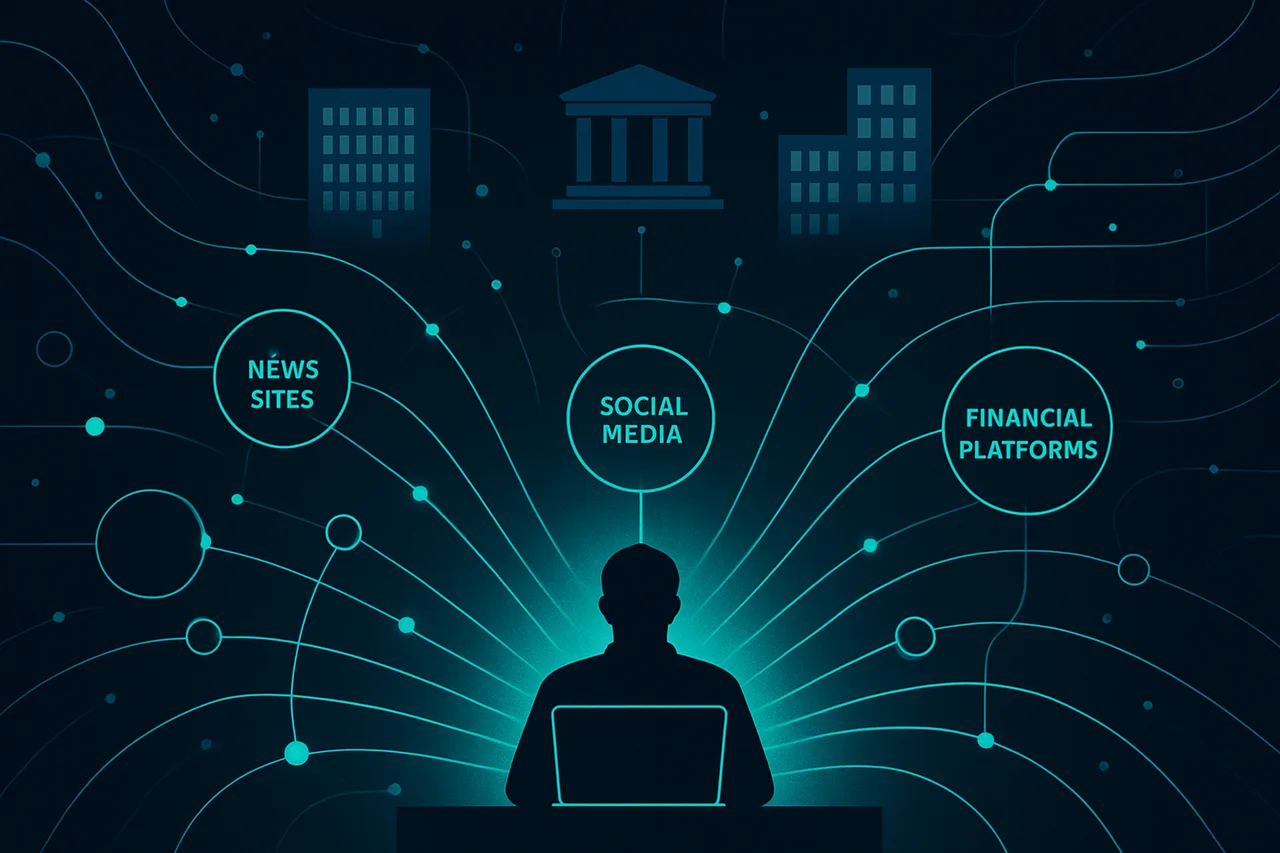
Major financial news sites use sophisticated tracking technology that goes far beyond simple cookies. They monitor your scroll speed, time spent on articles, and even mouse movement patterns to gauge your level of interest in specific companies or sectors.
The most concerning part? This data doesn't stay with the news publisher. Companies like Quiver Quantitative and Alternative Data Group aggregate retail investor behavior from dozens of sources, then package it for institutional clients who pay premium prices for early insight into retail sentiment shifts.
Social media platforms make this even worse. When you save a post about inflation data or share an article about Fed policy, you're essentially broadcasting your macro economic concerns to anyone willing to pay for that intelligence.
Remove Your Data with Incogni
Automated removal from 180+ data brokers. Set it and forget it.
Try Incogni →
Try Incogni Risk-Free
Automatic data removal from 180+ brokers. Set it and forget it.
Get Incogni →Building your private news consumption system
The solution involves creating a completely isolated information pipeline using RSS feeds and privacy-focused tools. Here's how to set up a system that keeps your research habits invisible to data brokers.
Step 1: Choose a private RSS reader
Ditch mainstream news apps entirely. Use open-source RSS readers like FreshRSS (self-hosted) or privacy-focused options like NetNewsWire. These tools don't track your reading habits or sell your data to third parties.
Step 2: Build your financial news RSS collection
Most major financial publications offer RSS feeds, though they don't advertise them prominently. Add feeds from Reuters Business (/business/feed), MarketWatch (/rss), and SEC filings (/rss) directly to your reader.
Step 3: Connect through a VPN
This step is crucial. Even with private RSS readers, your internet provider can see which financial sites you're accessing and potentially sell this information.
⭐ S-Tier VPN: NordVPN
S-Tier rated. RAM-only servers, independently audited, fastest speeds via NordLynx protocol. 6,400+ servers worldwide.
Get NordVPN →Step 4: Separate your research environment
Use a dedicated browser profile or even a separate device for financial research. This prevents cross-contamination between your personal browsing and investment research activities.
Step 5: Aggregate macro news feeds strategically
Set up feeds from Federal Reserve economic data (FRED), Treasury Department announcements, and international central bank communications. Having a comprehensive macro news feed helps you spot trends without relying on filtered, potentially biased financial media interpretations.
Common privacy mistakes that expose your strategy
I've seen investors take some privacy precautions but still leave themselves vulnerable through seemingly innocent habits. Here are the biggest mistakes to avoid.
Using "private" browsing for financial research
Incognito mode only prevents local storage of your browsing history. Your internet provider, the websites you visit, and any tracking scripts can still monitor your activity. It provides zero protection against the type of data collection that affects investors.
Mixing personal and investment social media
Following financial accounts on your main Twitter or LinkedIn profile creates a detailed map of your investment interests. Data brokers can easily connect your social media financial activity to your real identity and potentially your brokerage account patterns.
Trusting "free" financial news apps
Apps like Yahoo Finance, Robinhood's news feed, and even some brokerage research tools are notorious for detailed user tracking. They're free because your attention and behavioral data are the actual product being sold.
Ignoring email newsletter tracking
Financial newsletters embed tracking pixels that report when you open emails, which links you click, and how long you spend reading. This creates a timeline of your investment research that's incredibly valuable to institutional traders.
Using public Wi-Fi for market research
Coffee shop and airport Wi-Fi networks are often monitored by data collection companies. Your financial research sessions on public networks can be logged and associated with your device identifiers.
🖥️ Recommended VPS: ScalaHosting
After testing multiple VPS providers for self-hosting, ScalaHosting's Self-Managed Cloud VPS consistently delivers the best experience. KVM virtualization means full Docker compatibility, included snapshots for easy backups, and unmetered bandwidth so you won't get surprise bills.
Build #1 plan ($29.95/mo) with 2 CPU cores, 4 GB RAM, and 50 GB SSD handles most self-hosted setups with room to spare.
[GET_SCALAHOSTING_VPS]Full root access • KVM virtualization • Free snapshots • Unmetered bandwidth
⚡ Open-Source Quick Deploy Projects
Looking for one-click self-hosting setups? These projects work great on a ScalaHosting VPS:
- OneShot Matrix — One-click Matrix/Stoat chat server (Discord alternative)
- SelfHostHytale — One-click Hytale game server deployment
Frequently asked questions
Q: Can my brokerage see what financial news I'm reading?
A: Not directly, but many brokerages have partnerships with data providers who track retail investor sentiment across the web. If you're logged into your brokerage account while browsing financial news, there's potential for that activity to be connected to your trading patterns.
Q: Are financial podcasts safer than reading news articles?
A: Podcast apps typically track which episodes you download, how much you listen to, and which segments you replay or skip. This creates a detailed profile of your investment interests. Use privacy-focused podcast apps and download episodes through a VPN for better protection.
Q: Do I need to worry about this if I'm just a long-term investor?
A: Actually, yes. Long-term investment research patterns are particularly valuable because they indicate sustained interest in specific sectors or companies. This information helps institutional investors identify emerging retail trends months before they impact stock prices.
Q: Can using a private news reader actually improve my investment returns?
A: There's growing evidence that it can. When your research habits aren't being monitored and potentially front-run by institutional traders, your investment timing isn't being inadvertently shared with competitors. Plus, private RSS feeds often deliver news faster than social media algorithms or personalized news feeds.
The bottom line on private financial news consumption
Your investment research habits are valuable intelligence that's being systematically collected and sold to institutional traders. This isn't paranoia – it's documented reality in today's data-driven financial markets.
Setting up a private news reading system takes about an hour of initial configuration, but it provides ongoing protection for your investment strategy. The combination of RSS feeds, a quality VPN, and isolated browsing creates a significant barrier against financial surveillance.
In my experience, investors who take these privacy steps often report feeling more confident in their research process, knowing they're not inadvertently telegraphing their moves to larger market participants. The peace of mind alone makes the effort worthwhile.
The financial surveillance industry isn't going anywhere – if anything, it's becoming more sophisticated. Taking control of your news consumption privacy now positions you ahead of the curve, protecting both your current investments and your future trading strategies from unwanted attention.
" } ```