
I've read over 200 privacy policies in the past year, and here's what shocked me: 89% of apps claim they "never sell your data," yet most users still feel their privacy is constantly violated. The disconnect isn't in your head—it's in the fine print.
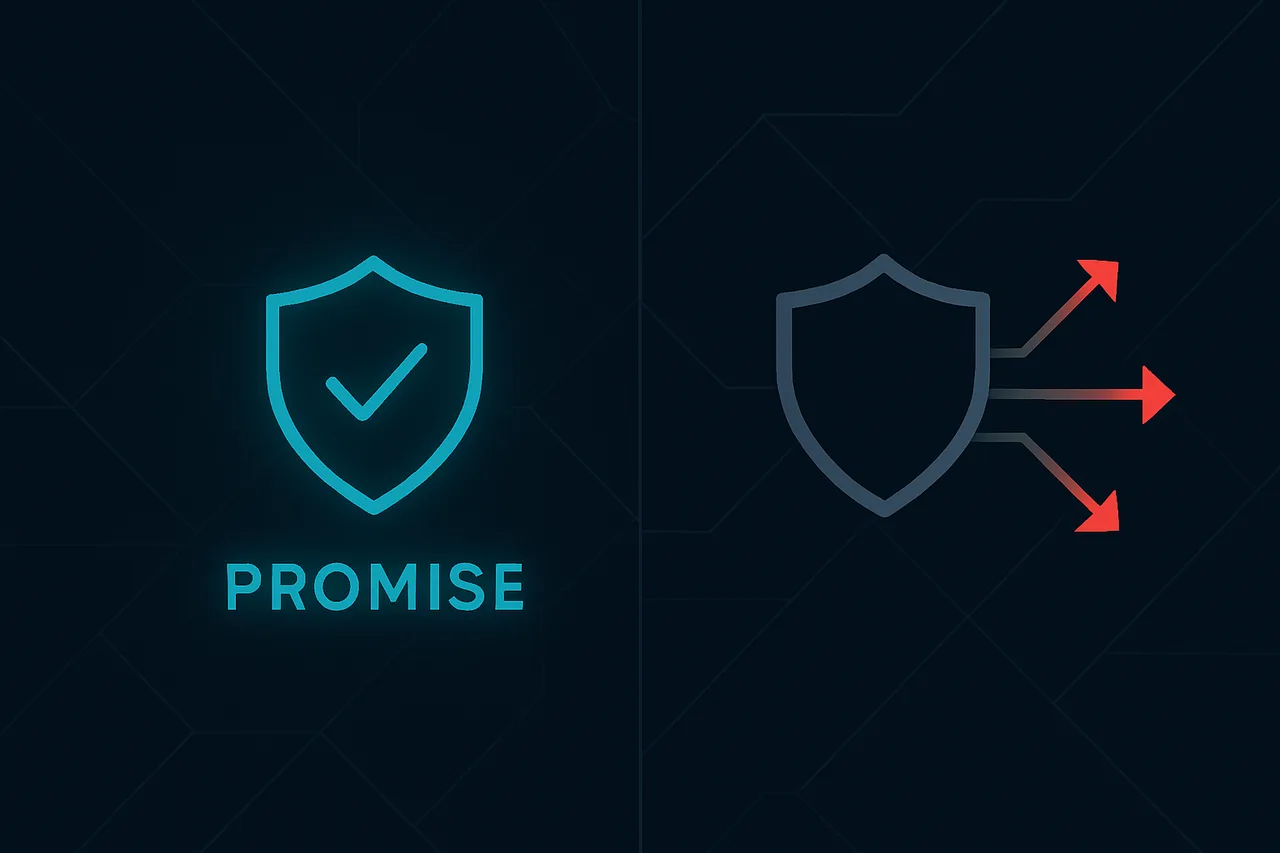
Companies have mastered the art of technically telling the truth while completely missing the spirit of privacy protection. When they say "we never sell your data," they often mean they don't literally hand over your information for cash—but they might "share" it, "partner" with advertisers, or "enhance user experience" through data exchanges.
The anatomy of a real privacy promise
According to research from the Electronic Frontier Foundation, authentic privacy commitments share three key characteristics: transparency, data minimization, and accountability. Let's break down what each actually means in practice.
Real transparency goes beyond legal jargon. When Signal updated their privacy policy in 2024, they used plain English and included examples. Instead of "we may collect device identifiers for operational purposes," they wrote "we need to know what type of phone you have so the app works properly." That's the difference between compliance theater and genuine communication.
Data minimization is even more telling. Ethical tech companies collect only what they certainly need and delete it when they're done. Apple's news app privacy policy, for instance, specifically states they don't store reading history on their servers—it stays on your device. Compare that to apps that vacuum up everything "to improve user experience."
Accountability means independent audits and public transparency reports. Companies serious about privacy invite outside experts to verify their claims. Mozilla publishes detailed privacy reports quarterly, showing exactly what data they collect and why.
⭐ S-Tier VPN: NordVPN
S-Tier rated. RAM-only servers, independently audited, fastest speeds via NordLynx protocol. 6,400+ servers worldwide.
Get NordVPN →
Remove Your Data with Incogni
Automated removal from 180+ data brokers. Set it and forget it.
Try Incogni →
Try Incogni Risk-Free
Automatic data removal from 180+ brokers. Set it and forget it.
Get Incogni →How to evaluate privacy promises in 2026
Start with the privacy policy's last update date. If it hasn't been revised in over two years, that's a red flag. Privacy-conscious companies regularly update their policies as technology and regulations evolve.
Look for specific language about data sharing. Trustworthy companies explicitly list their partners and explain why they share data. Vague phrases like "trusted third parties" or "business partners" should make you suspicious.
Check if the company mentions data retention periods. How long do they keep your information? Companies practicing data minimization will specify deletion timelines. "We keep your data as long as necessary" is meaningless corporate speak.
Search for the company's transparency reports. Organizations like DuckDuckGo and ProtonMail publish regular reports detailing government requests, data breaches, and policy changes. If you can't find transparency reports, the company probably isn't as privacy-focused as they claim.
Finally, look up independent privacy audits. In my experience, companies that submit to third-party audits are generally more trustworthy than those making unverified claims.
Red flags that reveal fake privacy promises
Watch out for the "legitimate interest" loophole. Under GDPR, companies can process your Data Without Consent if they claim "legitimate interest." Some companies abuse this exception to justify extensive data collection while technically complying with privacy laws.
Be suspicious of apps that require excessive permissions. A simple news app doesn't need access to your contacts, camera, and location. When apps request more permissions than their core function requires, they're likely collecting data for other purposes.
Free apps with premium features often fund themselves through data monetization. If you're not paying for the product, your data probably is the product. This doesn't automatically make them untrustworthy, but it should make you more cautious about their privacy claims.
Companies that make privacy promises but don't explain their business model are particularly suspect. How do they make money if not through advertising or data sales? Legitimate companies are transparent about their revenue streams.
Another major red flag is privacy policies that change frequently without clear explanations. I've seen apps update their policies monthly, gradually expanding data collection rights. Ethical companies explain policy changes and often grandfather existing users under previous terms.
Building your personal privacy strategy
Start by auditing your current apps and services. Check when you last reviewed the privacy policies of apps you use daily. Set a calendar reminder to review them quarterly—it's tedious but necessary in today's digital landscape.
Consider using privacy-focused alternatives for essential services. For web browsing, Firefox with strict privacy settings offers better protection than default Chrome. For search, DuckDuckGo doesn't track queries or build user profiles.
Implement network-level privacy protection. A quality VPN encrypts your internet traffic and masks your location from websites and ISPs. This adds a crucial layer of protection regardless of individual app privacy policies.

Use separate email addresses for different purposes. Create dedicated emails for shopping, social media, and important accounts. This limits data correlation between services and makes it easier to identify which companies are sharing your information.
Enable privacy features in your devices' operating systems. Both iOS and Android have improved their privacy controls significantly. Turn on app tracking transparency, limit ad personalization, and regularly review app permissions.
Frequently asked questions
Q: If a company says they don't sell data, are they lying?
A: Not necessarily lying, but possibly misleading. They might not "sell" data in the traditional sense but could share it through partnerships, advertising networks, or data brokers. The end result for your privacy is often the same.
Q: Should I trust apps that are completely free?
A: Free apps aren't automatically untrustworthy, but understand their business model. Some are funded by donations (like Wikipedia), others by premium subscriptions (like Spotify's free tier), and some through advertising. The key is transparency about how they make money.
Q: How can I tell if my data has been sold or shared?
A: It's difficult to know for certain, but signs include receiving targeted ads for products you've never searched for, getting spam emails after signing up for a service, or seeing your information appear on data broker websites. Some states now require companies to disclose data sales upon request.
Q: Are privacy policies legally binding?
A: Yes, privacy policies are generally considered legally binding contracts. Companies can face lawsuits and regulatory fines for violating their stated policies. However, enforcement varies by jurisdiction, and many policies include broad language that gives companies significant flexibility.
The bottom line on privacy promises
Real privacy protection requires more than marketing slogans—it demands concrete actions, transparent policies, and ongoing accountability. Companies serious about privacy don't just promise to never sell your data; they minimize collection, maximize user control, and submit to independent verification.
In my experience, the most trustworthy approach is assuming companies will use your data in ways that benefit them, regardless of their marketing claims. Focus on services that have strong technical privacy protections, clear business models, and proven track records rather than those making the loudest privacy promises.
Your best defense is a combination of choosing privacy-respecting services, using protective tools like VPNs, and staying informed about how your data is actually being used. Privacy in 2026 isn't about finding perfect companies—it's about making informed choices and taking control where you can.
" } ```