Why VPN App Updates Matter: NordVPN vs ProtonVPN vs TorGuard Update Frequency Compared
When most people evaluate a VPN, they look at speed, server count, and price. Almost nobody checks how often the app gets updated. That is a mistake. A VPN that has stopped updating its software is a VPN that has stopped patching security vulnerabilities, stopped fixing bugs, and stopped adapting to changes in the operating systems you run it on. It is, in practice, a VPN that has stopped protecting you — even if the servers are still technically running.
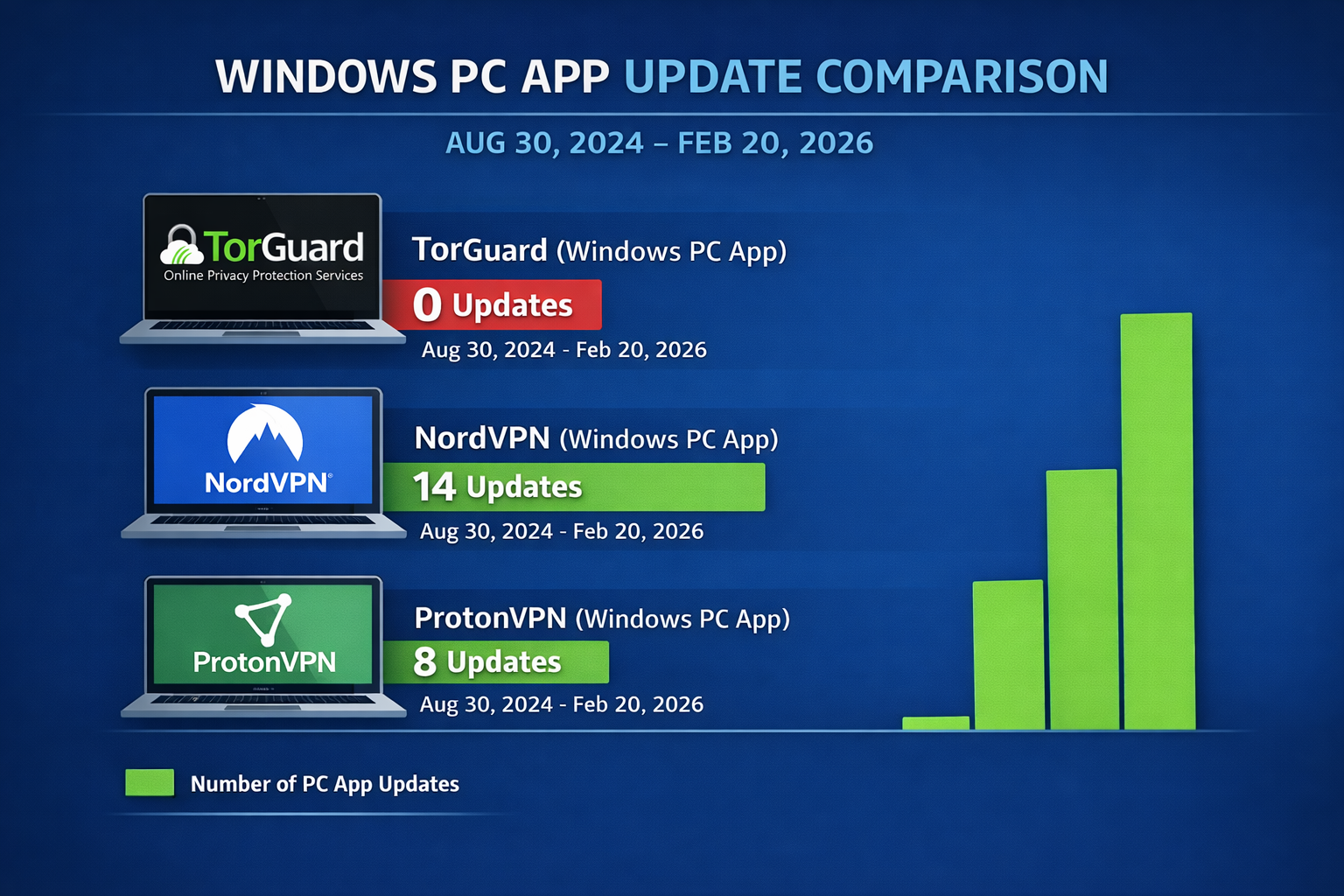
We tracked every publicly documented Windows desktop release from three VPN providers — NordVPN, ProtonVPN, and TorGuard — between August 2024 and February 2026. The results paint a stark picture of which providers are actively investing in their product and which have gone quiet.
⭐ S-Tier VPN: NordVPN
S-Tier rated. 6,400+ servers, fastest verified speeds, RAM-only servers. Independently audited no-logs policy. NordLynx protocol for maximum performance.
Get NordVPN →Beyond Updates: What Separates Active Providers from Stalled Ones
Update frequency is not the only indicator, but it is the most concrete and verifiable one. When a VPN provider stops updating, other things tend to follow: customer support response times stretch, documentation goes stale, community engagement disappears, and infrastructure maintenance becomes minimal.
The providers that are actively updating their apps are also the ones investing in new features. ProtonVPN added Connect & Go, FIDO2 hardware key support, and IPv6 improvements. NordVPN is shipping weekly hotfixes. These are not cosmetic changes — they reflect engineering teams that are engaged with the product and its users.
If your VPN provider has not updated their desktop app in more than six months, it is worth asking: what else have they stopped doing that you cannot see?
Bottom Line
VPN app updates are not optional. They are how your provider patches security vulnerabilities, fixes bugs, maintains compatibility with your operating system, and improves the features you are paying for. Any VPN that has stopped updating has, in practice, stopped protecting you at the level you expect.
NordVPN and ProtonVPN both demonstrate healthy update cadences — roughly monthly releases with meaningful changelogs. TorGuard has not updated its Windows app in nearly two years, and the consequences are already visible in broken protocols and degraded performance.
When evaluating a VPN, check the update history before you check the price. A cheap VPN that never updates will cost you more in the long run than a maintained one that charges a few dollars more per month.
ProtonVPN remains our top recommendation — Swiss-based, open-source, independently audited, and actively shipping updates with real features. See how all VPNs rank on our transparent 93.5-point scoring system.
Sources: Uptodown NordVPN Version History, Releasebot ProtonVPN Release Notes, TorGuard Downloads Page, ProtonVPN Official Release Notes, CyberInsider TorGuard Review 2026, VPNTierLists: Is TorGuard in Maintenance Mode?.